
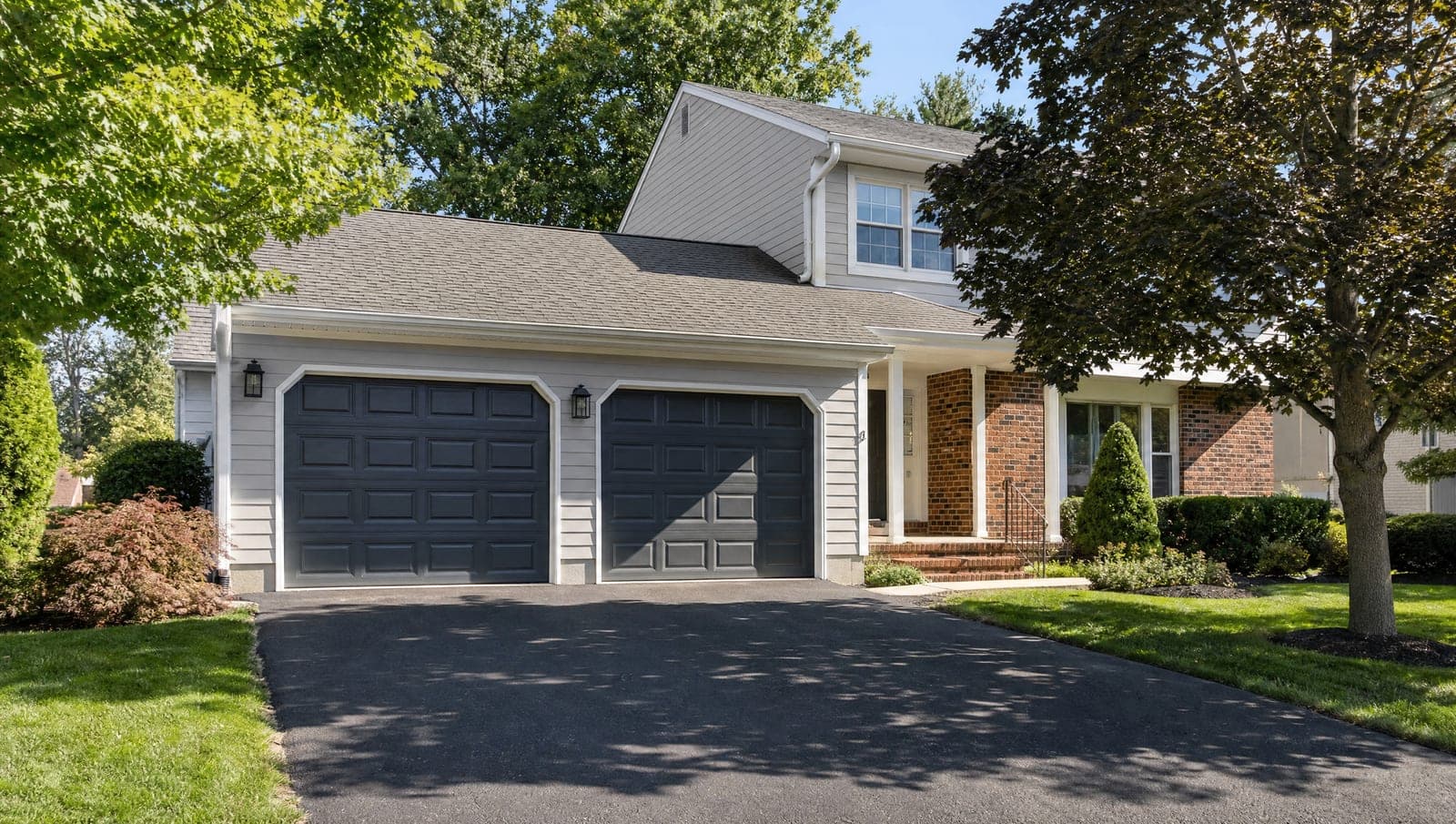
The first question most homeowners ask before a new garage door goes in is some version of "do I need a permit for this?" The honest answer in Bergen County is that it depends on what you're actually changing. A straight swap of one door for another in the same opening is treated very differently than widening that opening or wiring a new opener. Below is how the New Jersey rules work, what triggers a permit, and how the towns we serve handle it.
Quick note before we go further. Rules and fees are set and enforced by each municipality, so Paramus, Hackensack, Ridgewood, and Teaneck all run their own construction departments. Use this as a map, then confirm the specifics with your town. The construction official in your town is the final word on whether a particular job needs a permit.
How New Jersey decides if your garage door needs a permit
New Jersey regulates building work statewide through the Uniform Construction Code, or UCC (N.J.A.C. 5:23). It's administered by the Department of Community Affairs but enforced locally, town by town. That single fact explains most of the confusion homeowners run into. The rule is statewide, but the application, the inspector, and the fee are all local.
The UCC sorts work into a few categories. The two that matter most for garage doors are ordinary maintenance and minor work. Knowing which one your job falls into tells you almost everything about the paperwork ahead.
Ordinary maintenance: usually no permit
Under the UCC, replacing a window or door, garage doors included, "in the same opening without altering the dimensions or framing of the original opening" is classified as ordinary maintenance. Ordinary maintenance needs no construction permit and no inspection. So a like-for-like replacement, an old steel door swapped for a new insulated steel door in the exact same rough opening, typically does not require a permit.
One thing people misread here. No permit does not mean no rules. Ordinary maintenance is not a waiver of code. The work still has to meet every applicable code requirement. The door still needs to be installed correctly, springs balanced, hardware rated. You just aren't pulling a permit to do it.
If the new door fits the existing opening and nobody touches the framing, header, or jambs, you're almost certainly in ordinary maintenance territory. The moment a saw or a structural member comes into play, that changes.
When a permit is actually required
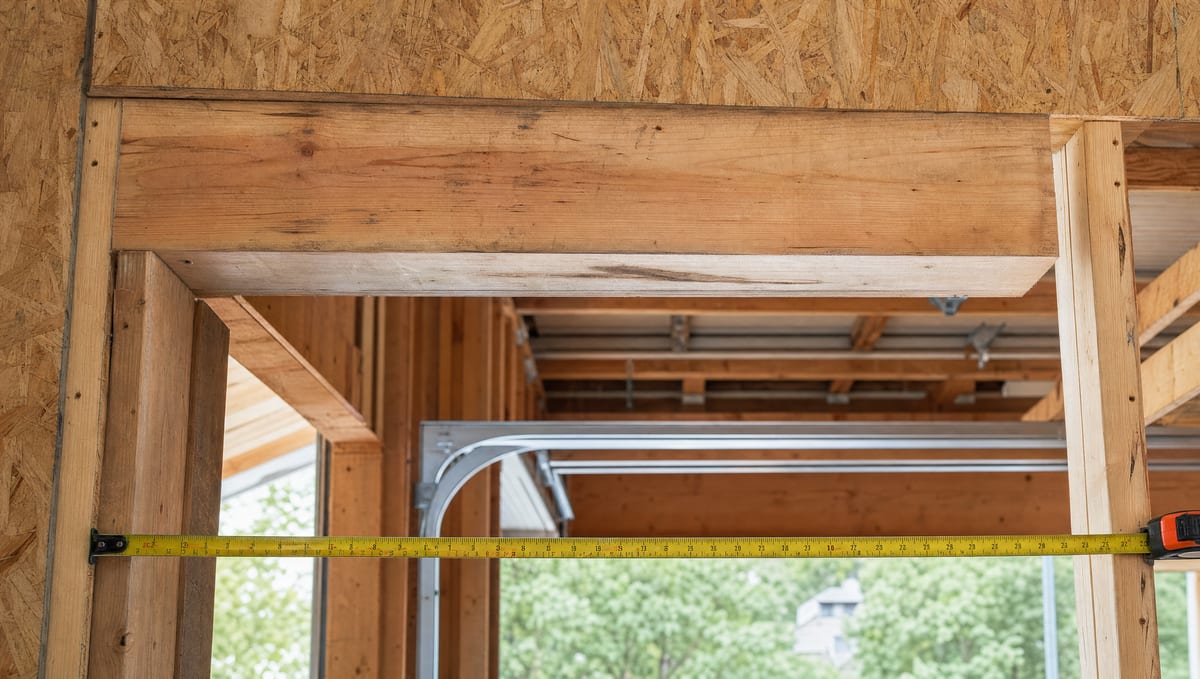
The exemption hangs on one phrase: same opening, same framing. Step outside that and you generally need a construction permit (building subcode). Common triggers:
- Widening or heightening the opening, for example going from a single 8-foot door to a wider single, or combining two singles into one double.
- Cutting a brand-new opening into a wall where none existed.
- Structural work on the header, jambs, or anything load-bearing around the opening.
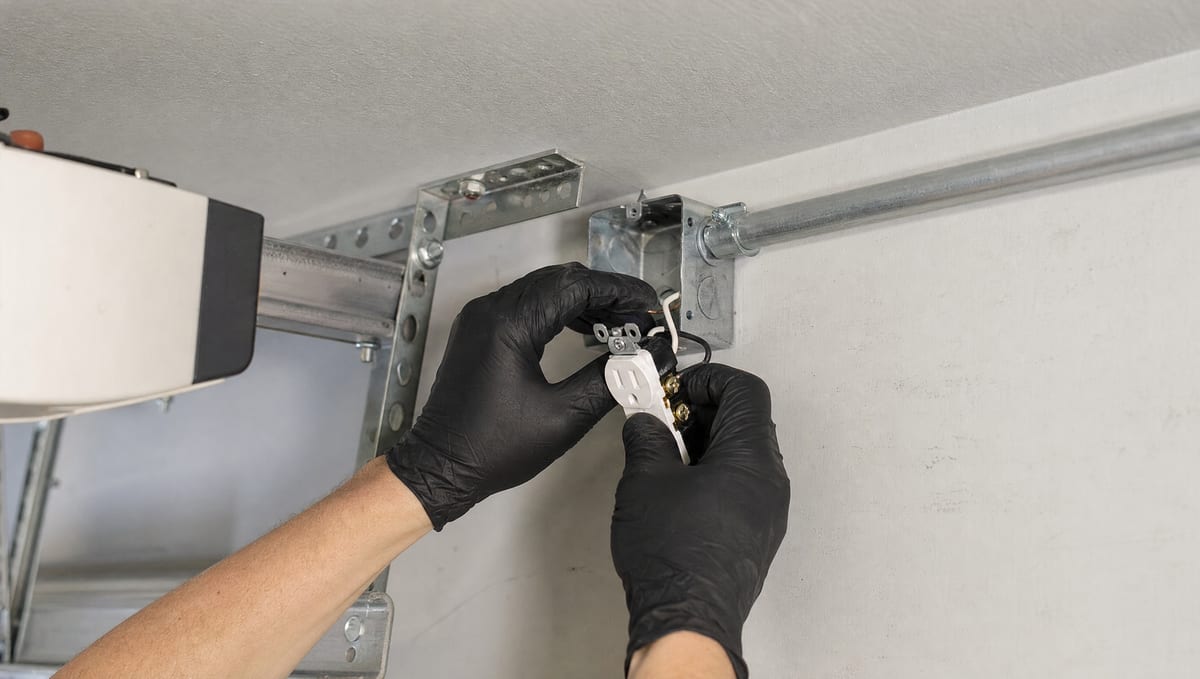
- Electrical for a new opener. Running a new circuit, outlet, or wiring usually requires a separate electrical subcode permit. Ordinary electrical "repairs" are narrowly defined, think like-for-like swaps of small existing devices, and a new dedicated opener circuit normally exceeds that.
If your project is a true upgrade, a bigger door, a new opening for a garage addition, or a fresh circuit for a smart opener, plan on a permit. This is also why a brand-new installation deserves a quick conversation about scope before anyone quotes it. A panel replacement on an existing door, by contrast, almost always stays in the no-permit lane since the opening never changes.
The middle category: minor work
There's a third category worth knowing, called minor work (N.J.A.C. 5:23-2.17A). For minor work, the job can start before the permit is formally issued, but a permit application still has to be filed (commonly within about five business days) and an inspection is still required. Some opener and electrical scenarios land here rather than in the no-permit category. That's exactly why a quick call to your town matters. Whether a given opener install counts as minor work or full electrical-permit work depends on the scope and the local official's read of it.
Who pulls the permit, and why it protects you
You don't need to stand in line at town hall. A registered home improvement contractor normally pulls the permit, files the paperwork, and schedules the inspections. New Jersey requires contractors to register annually with the Division of Consumer Affairs (the HIC registration), which includes carrying commercial general liability insurance of at least $500,000 per occurrence. New Jersey also bars towns from issuing construction permits to unregistered contractors, so a legitimate pro handling your permit is a quiet signal they're properly registered.
Garage Door USA is licensed, insured, and NJ HIC registered, and we handle the permit and inspection side, so you're not dealing with the construction office yourself.
Why bother when the job feels small? A permit plus inspection creates a documented, code-compliant record. That record matters in two real moments:
- Safety and liability. An inspected install is verified to meet code. If something fails later, you have proof it was done right.
- Resale and appraisal. When you sell, buyers and their inspectors look for open or missing permits. Unpermitted structural or electrical work can stall a closing or force you to retroactively permit and re-inspect, often at a worse moment and a higher cost.
The typical permit process in Bergen County
The flow is similar town to town, even though the fees and turnaround differ:
- Application. The contractor submits the permit application with plans or specs as the job requires. A simple door usually needs little, a new opening needs more detail.
- Plan review. The construction department reviews for code compliance.
- Issuance. The permit is issued. For minor work, the job may already be underway.
- Work. The installation happens.
- Inspection. One or more inspections before final sign-off. Electrical work gets an electrical inspection.
Fees and timelines: confirm locally
There is no single statewide permit fee, and there's no Bergen County office that handles this for everyone. Each municipality sets its own fee schedule and its own review pace. We won't quote you a dollar figure here because any number we made up would be wrong somewhere. Instead, call or check your town's construction department for the current fee and expected turnaround. Timelines swing with each town's workload, so treat any estimate as a range, not a promise.
A practical tip. Search "[your town] construction department" or call the town hall and ask for the construction official's office. Tell them exactly what you're doing (same-opening door swap, new opener circuit, widening the opening) and they'll tell you what applies.
Notes for the towns we serve
- Homeowners in Paramus apply through the Paramus construction department, which is also closest to our depot.
- Residents of Hackensack file with the city's own construction office.
- Ridgewood runs its own building department with its own fee schedule.
- Teaneck handles permits and inspections through its township office.
Same job, four different counters. That's normal in Bergen County, and it's why "confirm with your town" isn't a dodge, it's the actual rule.
Frequently asked questions
Do I need a permit to replace my garage door in New Jersey?
Usually not, if it's a like-for-like replacement in the same opening with no change to the dimensions or framing. The UCC treats that as ordinary maintenance, which needs no permit and no inspection. The work still has to meet code, though.
When does a garage door job actually require a permit?
When you change the opening size, cut a new opening, do structural work on the header or jambs, or run new electrical for an opener. Take any of those steps outside the same-opening exemption and a construction permit typically applies.
Do I need a permit just to replace or add a garage door opener?
It depends on the electrical scope. A new dedicated circuit or outlet for the opener generally needs an electrical subcode permit. Some installs fall under minor work, where you file an application and still get inspected. Confirm with your town's construction official, since interpretations vary.
Who pulls the permit, me or the contractor?
A registered contractor normally pulls it and handles the inspection scheduling. New Jersey won't issue construction permits to unregistered home improvement contractors, so a properly registered pro takes care of the paperwork for you.
How much does a garage door permit cost in Bergen County?
There's no flat answer. Fees are set per municipality, so Paramus, Hackensack, Ridgewood, and Teaneck each have their own schedule. Check with your local construction department for the current amount.
What if work that needed a permit was done without one and I'm selling?
Unpermitted structural or electrical work can surface during a buyer's inspection and stall the sale. You may have to apply for the permit after the fact and pass inspection before closing. Permitting it the right way the first time avoids that scramble.
Talk to a local pro before you start
If you're planning a new door, a bigger opening, or a new opener and you're not sure which category your job falls in, get a straight answer before any work begins. Garage Door USA covers Paramus and the surrounding Bergen County towns with same-day service, and we handle the permit and inspection paperwork when a job calls for it. Call (201) 500-3377 any time, we run a 24/7 line, or read more about what's involved in a new garage door installation.