
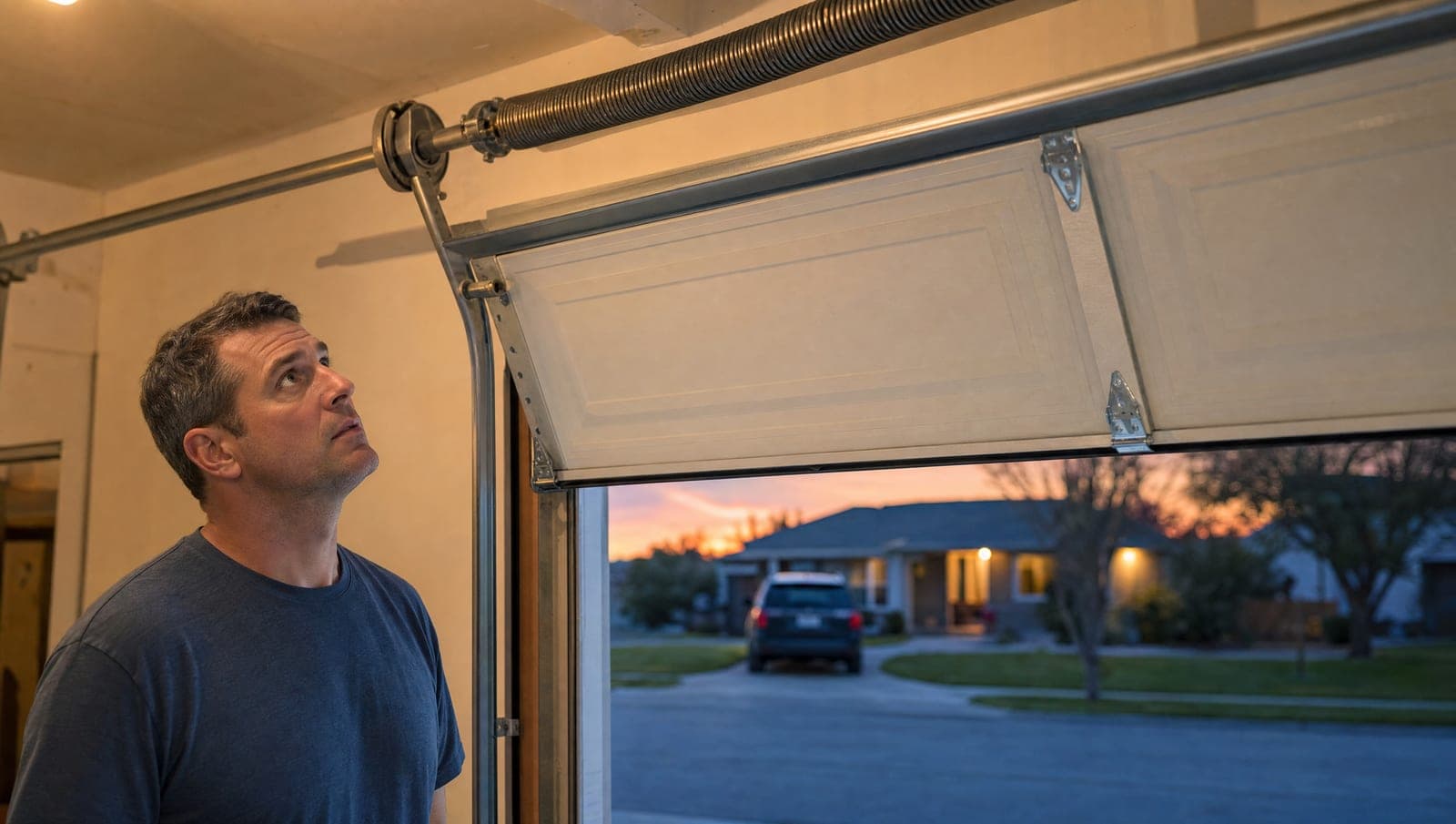
A garage door has one job, and when it's healthy it does that job quietly. So when it starts squealing, grinding, or banging, your door is basically talking to you. The trick is knowing what each sound means, because some of these noises are a five-minute fix with a can of the right lubricant, and a couple of them are the kind of thing you stop and call about before anyone touches the door again.
Here's a sound-by-sound breakdown from the technician's point of view, with a clear line drawn between what's safe to handle yourself and what crosses into call-a-pro territory.
Squeaking or squealing
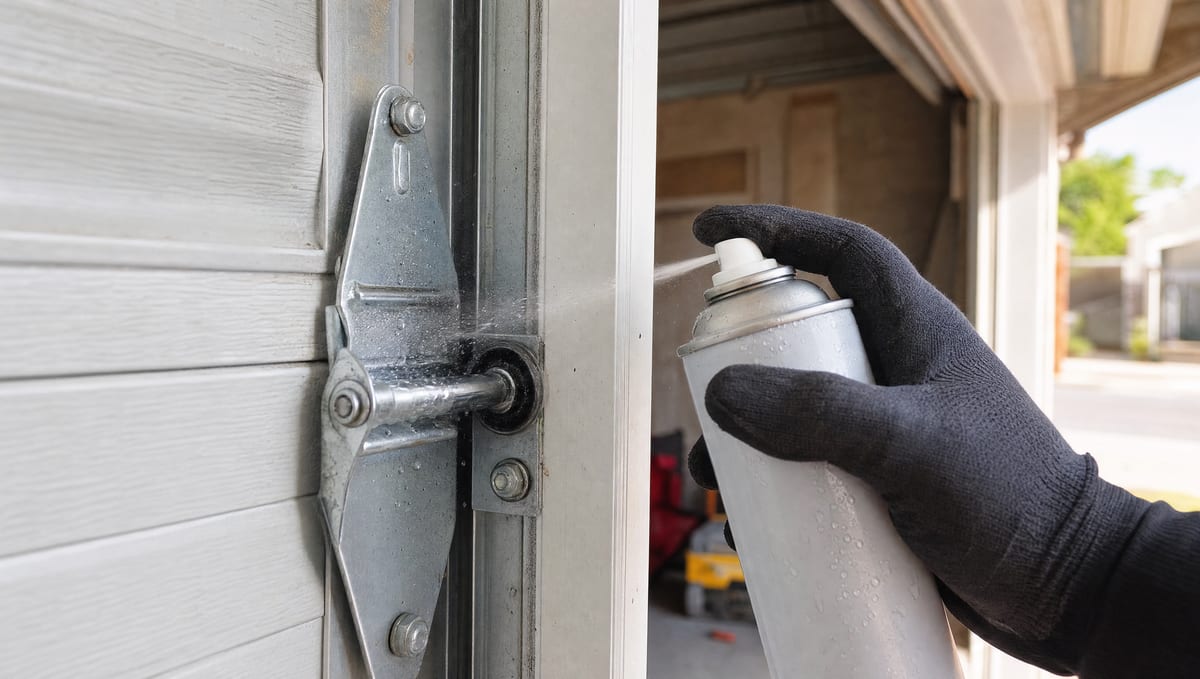
This is the most common complaint, and it's usually the most harmless. A high squeak or squeal almost always comes from dry metal: roller stems, hinges, and bearings that have lost their lubrication, or nylon rollers that have worn down. Humidity and the big temperature swings we get across the year speed this up, so rollers and hinges around here tend to get noisy a little faster than the brochure suggests.
This one is DIY-safe. Wipe down the moving parts, then apply a proper garage-door lubricant, either a silicone-based spray or white lithium grease, to the hinges, the roller stems and bearings, and the springs. Wipe off the excess. If the rollers themselves are cracked or the nylon is visibly worn, swap them out. Upgrading old steel rollers to nylon is a common, lasting way to quiet a door down.
Skip the WD-40 and skip the tracks. WD-40 is a solvent and degreaser, not a lubricant, so it cleans off the good stuff and then attracts grit. And never spray the tracks themselves. The rollers ride in those tracks, and lube there just collects dirt. Clean the tracks, lube the rollers.
Grinding
Grinding is a harsher, metal-on-metal sound, and it points to two very different problems depending on where it's coming from.
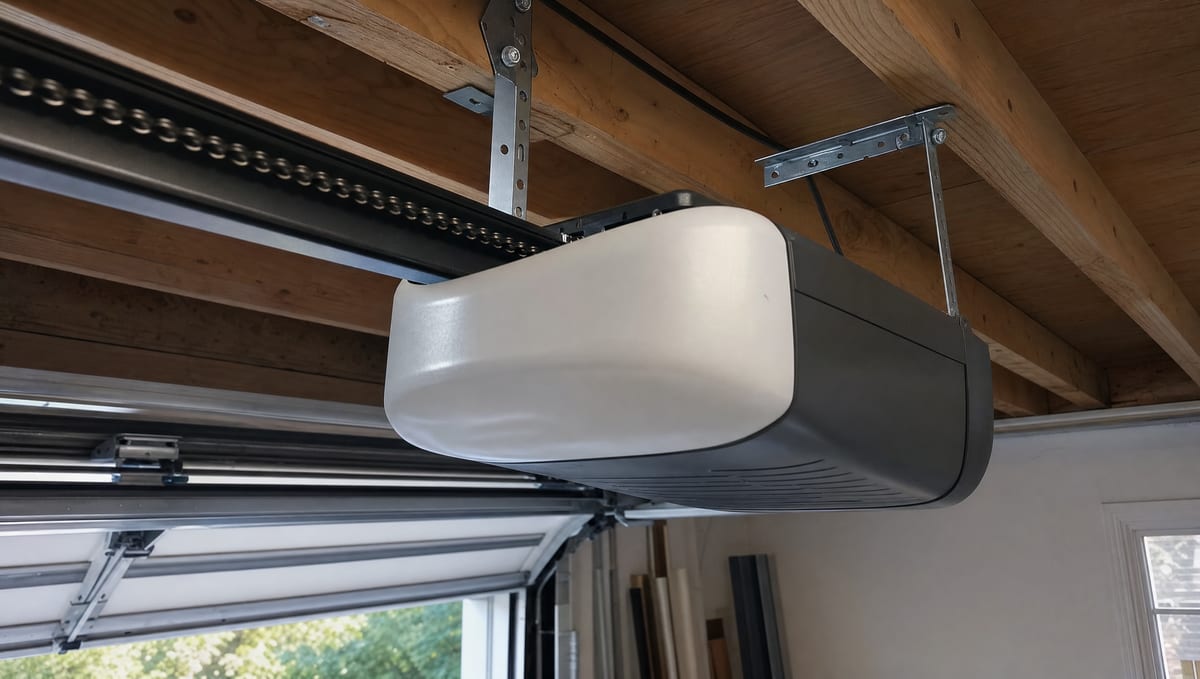
If the grinding is at the door, you're likely hearing worn metal rollers or dried-out bearings dragging in the track. If it's coming from the opener motor up at the ceiling, listen for a specific tell: the motor runs but the chain or belt barely moves, and you find what looks like white or black plastic shavings under the motor housing. That's the nylon drive gear stripping out against the metal worm gear. Chain and belt openers from brands like Chamberlain and LiftMaster all use this gear, and it's designed to be the part that fails first so the motor doesn't burn up.
The good news on the gear: a stripped drive gear does not mean you need a whole new opener. A gear-and-sprocket kit restores it, and the new gear has to be packed with the special low-temperature grease that comes in the kit, not WD-40 and not wheel-bearing grease. That said, this is a call-a-pro job. So are worn bearings. Getting the timing and the travel limits right after a gear swap is fussy, and a botched job will eat the new gear in months.
Rattling or clattering
A loose, rattly clatter while the door runs is the easiest fix on this list. Every cycle sends a little vibration through the hardware, and over months and years that backs out nuts, bolts, brackets, and the chain. Tighten it all back up and the rattle disappears.
To do it safely:
- Close the door fully before you start.
- Run a socket wrench or nut driver over every visible nut and bolt on the hinges, brackets, and track mounts.
- Snug them firm, but don't crank past that. Overtightening strips the threads or pulls bolts through thin metal.
- Leave the bottom-bracket bolts alone. Those sit under cable tension and are not a DIY part.
That last point matters. The brackets at the very bottom corners of the door are anchored to the lift cables, which are under serious tension. Tools do not belong there unless you're a technician.
Banging or a loud pop
This is the one to take seriously. A single sharp bang, loud enough that people describe it as a gunshot or a firecracker, is very often a torsion spring snapping. The spring stores a lot of energy to counterbalance the door's weight, and when it breaks, all of that releases in an instant.
You can confirm it by looking at the coiled spring mounted on the bar above the door. A broken torsion spring shows a gap of an inch or two where the coil separated. The other giveaway: the door suddenly feels enormously heavy or won't lift at all, because the spring that was doing the heavy lifting is gone.
If that's what you're seeing, stop. Don't try to force the door open, and don't run the opener against it. With the spring gone the door is dangerously heavy, and the cables can whip under load. This is an emergency, and it belongs to a spring repair technician, not a homeowner with a YouTube tab open. Spring work involves lethal stored energy and the right winding bars and clamps to control it.
A softer, more occasional banging is less dramatic. That's usually a section binding or knocking as the door travels, which can point to an alignment or balance issue worth having looked at before it gets worse.
Torsion springs are rated in cycles, one open plus one close being a cycle. A standard spring runs somewhere around 10,000 cycles, which lands at roughly seven to ten years for an average household. Higher-cycle springs exist for busier doors. None of that is a guarantee, and around here the first hard cold snap each fall is prime time for a tired spring to give out, because cold makes steel more brittle and stiffens everything up.
Popping or crackling on the way up
A popping or crackling sound as the door moves is usually the sections flexing against each other, or the torsion tube twisting as it takes up the load. On its own it isn't always a crisis, but if it's new, or it's getting louder, treat it as an early warning that the balance or alignment is drifting. A quick professional check now is cheaper than a bent door later.
A straining or humming motor
When the opener hums or strains but the door barely moves, or doesn't move at all, there are a few suspects.
The classic one is a failing start capacitor. The capacitor gives the motor the jolt of torque it needs to get going, and when it fails the motor just hums, pulls way more current than normal, and overheats without turning. Capacitors typically last somewhere in the five-to-ten-year range, and heat and power surges shorten that. A bad one sometimes looks swollen, bulging, or scorched. Either way, replacing it is an electrical job. Capacitors hold a stored charge that can shock you even with the opener unplugged, so this is firmly a call-a-pro repair, not a weekend project.
The other common cause is sneakier: the opener is fine, but the door has gone heavy and out of balance because of a spring problem, so the motor is straining against weight it was never meant to lift. That's why a humming or struggling opener should always include a balance check before you assume the motor is dying.
The balance test you can safely do
This is a genuinely safe diagnostic, and it tells you a lot:
- Close the door all the way.
- Pull the manual-release cord to disconnect the opener from the door.
- Lift the door by hand to about halfway and let go.
A balanced door stays roughly where you left it. If it slides down, the springs are weakening. If it springs upward, they're over-tensioned. Either result means the spring system needs attention from a pro. Do not try to adjust the springs yourself based on this test. The test is safe; the adjustment is not.
Slapping
A rhythmic slapping noise on a chain-drive opener is almost always the chain itself, stretched and sagging until it slaps the rail on every pass. On many models this is a homeowner adjustment: follow the owner's manual to take up the slack so the chain carries slight tension and sits just off the rail. If your opener is a belt-drive or screw-drive unit, the slapping cause and the fix are different, so check the manual for your specific drive type.
Vibration or buzzing that shakes the ceiling
If the whole ceiling buzzes and shakes when the door runs, the opener is usually transmitting its vibration into the framing through a loose mount. Check and tighten the bolts on the ceiling and header brackets, and the lag screws that anchor the unit into the joists. Snugging those down often quiets the whole room. While you're up there, a routine tune-up catches loose hardware, dry rollers, and a drifting balance before any of them turn into the louder problems above.
Is it an emergency? A quick gut check
Most garage door noises can wait for a scheduled visit. A few cannot. Stop using the door and call right away if you notice any of these:
- A single loud bang, and now the door won't lift or feels suddenly very heavy. That's a broken spring.
- A cable that's visibly frayed, snapped, or hanging loose.
- The door sitting crooked, jammed, or partly out of its track.
- Grinding combined with the door coming off the track on one side.
In any of those cases, running the opener again can turn a repair into a much bigger one, or hurt someone. That's exactly what the 24/7 line is for, and emergency repair means a real technician, not a callback on Monday.
Frequently asked questions
My door squeaks. Can I just spray it with WD-40?
Better not to. WD-40 is a cleaner and solvent, so it strips away real lubricant and then attracts dust that gums things up. Use a silicone-based garage-door spray or white lithium grease instead, on the hinges, roller bearings, and springs. Clean the tracks but never lube them.
I heard a loud bang and now the door won't open. What happened?
That combination almost always means a torsion spring snapped. Look at the coiled spring above the door for a one-to-two-inch gap. If you see it, don't try to open the door or run the opener. The door is now very heavy and the cables are under tension. This is a call-a-pro emergency.
What's the best lubricant, and where does it go?
A silicone spray or white lithium garage-door grease. Apply it to the hinges, the roller stems and bearings, the springs, and the opener rail. Skip the tracks entirely. The rollers run in them, and lube there just traps grit.
Why does the opener motor hum but the door doesn't move?
Most often a failed start capacitor, which lets the motor hum without producing the torque to turn. It can also mean the motor is failing, or that a spring problem has made the door too heavy for the opener. Capacitor work is electrical and holds a stored charge, so leave it to a technician.
My opener grinds. Do I need a whole new unit?
Usually not. Grinding plus plastic shavings under the motor points to a stripped nylon drive gear, which a gear-and-sprocket kit fixes. The motor is typically fine. Getting the limits and grease right is the tricky part, so it's worth having a pro do the swap.
How can I tell if my door is out of balance?
Close it, pull the manual-release cord, and lift the door halfway by hand. A balanced door holds its position. If it falls or shoots up, the springs are off, and that's a job for a technician, not a DIY adjustment.
When in doubt, let us listen
Some of these sounds you can chase down with a wrench and the right can of lube on a Saturday morning. Others are the door warning you before it fails outright. If you're not sure which camp your noise falls into, that's a fine reason to call. We offer same-day service, and the line at (201) 500-3377 is staffed around the clock for the bangs and grinds that can't wait. For everything else, a scheduled tune-up is the quiet, boring outcome we're all after.