
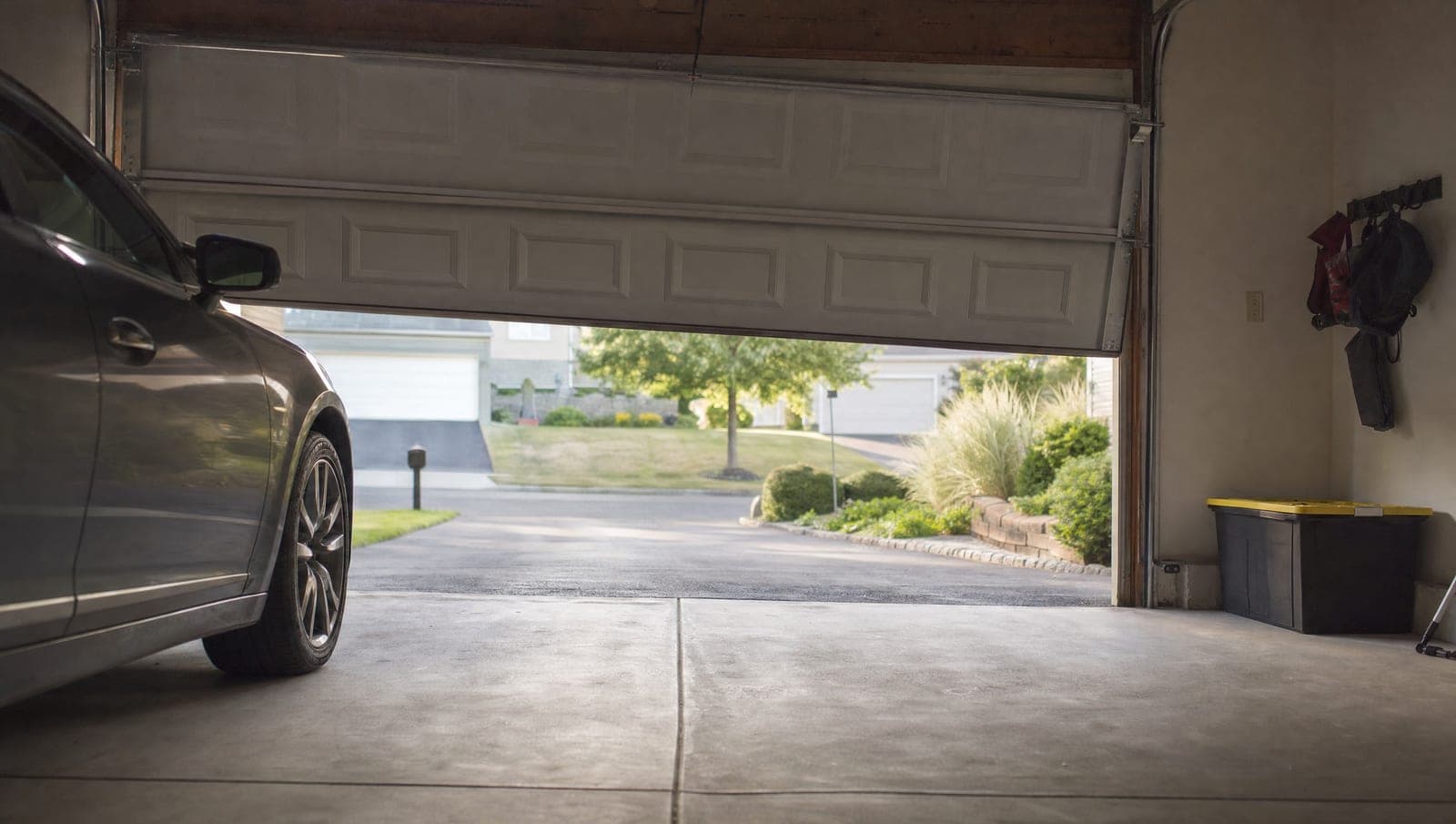
A broken torsion spring almost always introduces itself the same way. You hear a loud bang from the garage, sometimes mistaken for a gunshot or a firecracker, and an hour later the door won't budge. The door worked fine that morning. By afternoon it sits there dead, and your car is trapped inside.
If that sounds familiar, this guide walks through the signs that point to a broken torsion spring, how to tell a spring problem apart from an opener problem, and the one thing you should absolutely not try to fix yourself. Torsion springs hold an enormous amount of stored energy, so the goal here is to help you diagnose the issue safely and know what to do next.
What a torsion spring actually does
Your garage door is heavy. Depending on size, material, and whether it's insulated, a residential door commonly weighs somewhere between 130 and 350-plus pounds. The opener on your ceiling is not built to lift that dead weight. It's sized to nudge a door that's already counterbalanced.
That counterbalance comes from the spring system. A torsion spring is the tightly wound coil mounted horizontally on a metal shaft, called the torsion tube or bar, directly above the door opening. As the door closes, the spring winds up and stores torque. As the door opens, it unwinds and releases that force, doing almost all the lifting. Cable drums on each end of the shaft translate that torque into pull through the lift cables that run down to the bottom of the door.
Extension springs are the other common type. Instead of sitting on a shaft above the door, they run along the horizontal tracks on each side and stretch and contract as the door moves. Both systems do the same job. They offset the door's weight so the opener (or your arm) only has to move a few pounds of net force. When a torsion spring snaps, that counterbalance disappears instantly, and the full weight of the door drops onto the opener and cables.
The clear signs your torsion spring is broken
Some of these show up on their own, but usually you'll notice two or three together.
- A loud bang or pop. The single most common giveaway. The spring is under serious tension, and when the metal fatigues and snaps, it lets go with a sharp crack that echoes through the garage. People describe it as a gunshot or a heavy object falling.
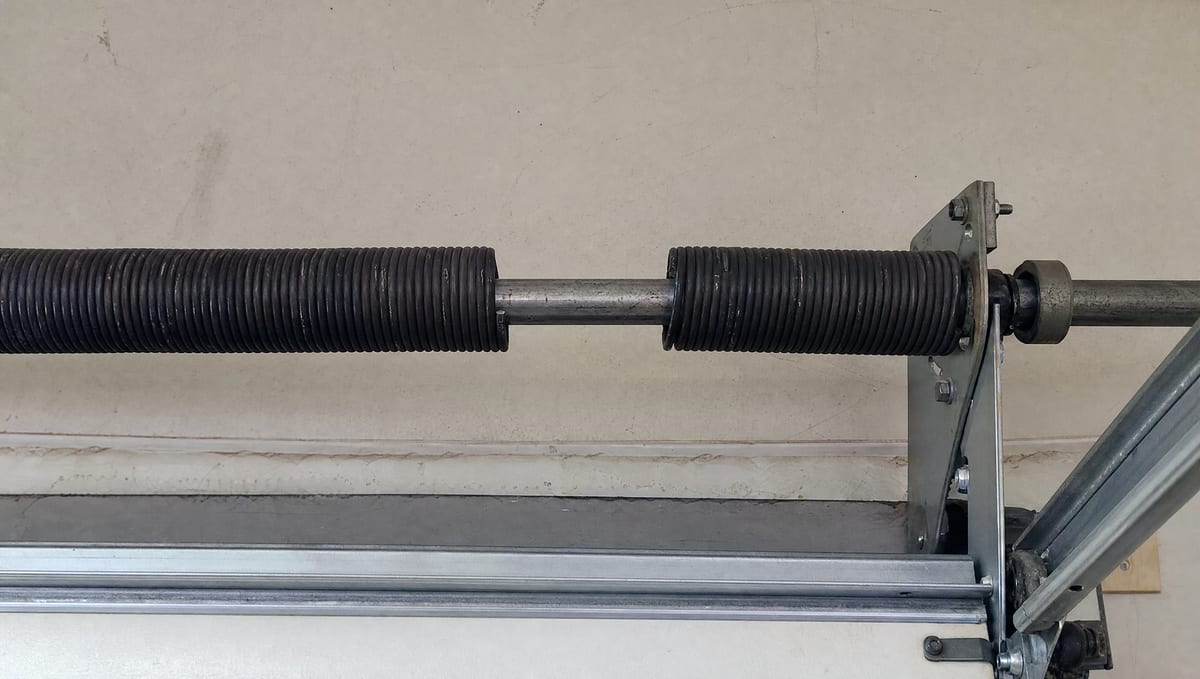
- A visible gap in the coil. Look at the spring on the shaft above the door. A healthy torsion spring is one continuous, tight coil. A broken one shows a distinct gap, usually one to two inches, where the coil separated. This is the most reliable visual confirmation.
- The door won't open or feels impossibly heavy. With the counterbalance gone, the door is just dead weight. It may refuse to lift at all, or stop after a few inches.
- The opener strains, then quits. You press the button, the motor hums or grinds, the door lifts a few inches, and then it stops or reverses back down. The opener is trying to move weight it was never designed to handle.
- The door opens crooked. If one side lifts and the other lags, the door goes up lopsided or jams in the track.
- Slack or loose lift cables. Once the spring loses tension, the cables go slack. You might see one hanging off its drum or dangling alongside the door.
Two springs? One can break while the other looks fine
Many doors, especially wider two-car doors, run a pair of torsion springs. It's common for one to break while the other still looks perfectly intact. The door will still feel too heavy and the opener will still struggle, because half the counterbalance is gone. Don't assume your springs are fine just because one of them looks normal.
How to tell if it's the spring or the opener
This trips up a lot of homeowners. Here's a quick way to think it through, without touching the spring:
- If you heard a bang and now see a gap in the coil, it's the spring. No further diagnosis needed.
- If the opener hums and labors but the door barely moves, that points to lost counterbalance, which means a spring, not the motor.
- If the opener is completely silent and unresponsive, or the lights flash with no motor sound, the problem is more likely electrical or in the opener itself.
A balanced door, with the opener disconnected, lifts smoothly with one hand and stays put halfway up. A door with a broken spring will not. We cover the safe way to disconnect the opener below.
Why this repair is genuinely dangerous
This is the part to take seriously. A torsion spring stores hundreds of pounds of force even when the door is closed and everything looks calm. That energy doesn't go away when the spring breaks. A partially broken or still-loaded spring can still release violently.
Garage door technicians and safety groups have long documented what happens when DIY torsion spring jobs go wrong: broken fingers, deep lacerations, lost teeth, and serious crush injuries. The usual cause is a winding bar slipping out of the cone while the spring is under load. It's consistently rated one of the most dangerous home repairs an untrained person can attempt. The specialized winding bars, the exact spring sizing, and the technique all matter, and there's very little margin for error.
The honest advice from anyone who does this for a living: do not try to unwind, remove, or replace a torsion spring yourself. The savings are not worth a trip to the emergency room.
Stop hitting the opener button
When the door won't move, the instinct is to keep pressing the button, hoping it pushes through. Don't. Every press piles secondary damage on top of the broken spring. Forcing a counterbalance-free door through the opener strips internal gears, burns out the motor, frays or snaps the lift cables, bends the top door panels, and can pull the door off its tracks. A simple spring replacement turns into a much bigger repair bill. The most useful thing you can do is leave the opener alone.
What to do right now
If you're confident the spring is broken, here are the safe steps, in order:
- Stop using the opener. No more button presses.
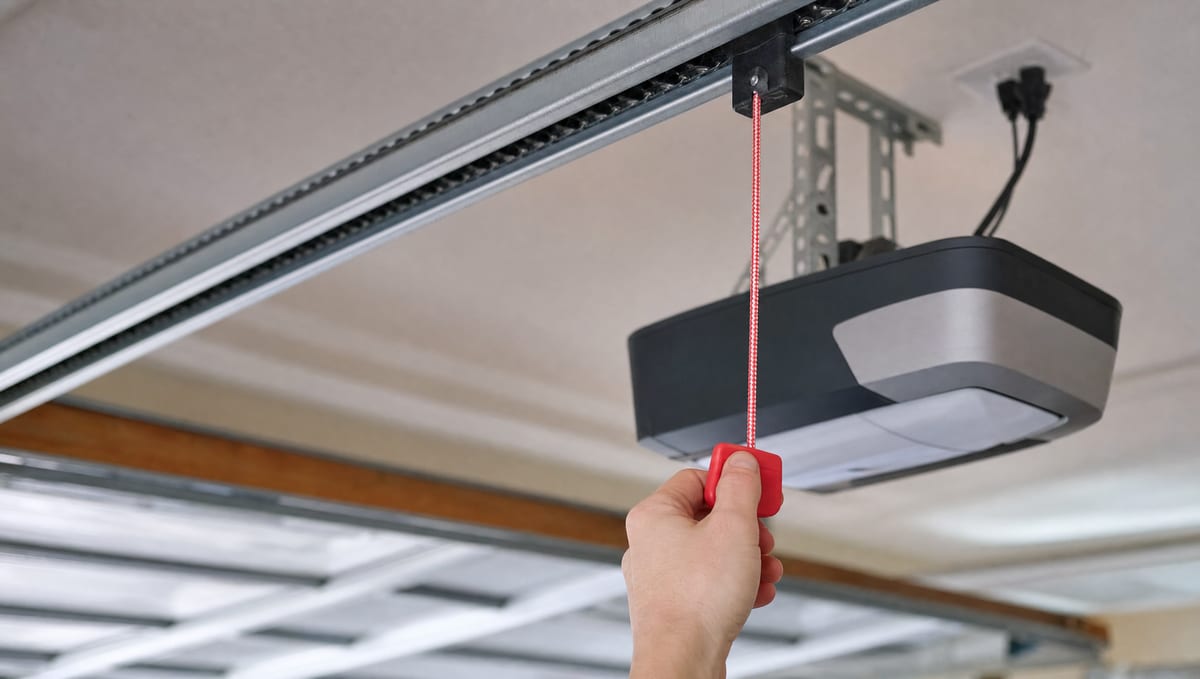
- Disconnect the opener with the manual release. Pull the emergency release cord, the one hanging from the opener rail, to separate the door from the carriage. This stops the motor from fighting the dead weight.
- Do not force the door open by hand. Without the spring, that door is full weight and can slam down hard. Leave it where it is, ideally closed.
- Keep people, pets, and cars clear. A heavy door with no counterbalance is unpredictable.
- Call a technician. This is a same-day fix for a pro with the right springs and tools.
If your car is stuck inside and you have an emergency, that's exactly what our 24/7 emergency repair line is for. A broken spring is one of the most common urgent calls we get across Hackensack and the surrounding towns.
How long springs last and why they break when they do
Torsion springs are rated by cycles, where one cycle is a full open plus close. Standard residential springs are commonly rated around 10,000 cycles. High-cycle galvanized upgrades run roughly 20,000 to 25,000-plus cycles. A typical household racks up about 1,000 to 1,500 cycles a year (three or four uses a day), so standard springs commonly last around seven to ten years. Heavy use, like a busy family with multiple drivers, can wear them out in two or three.
Here in North Jersey, cold mornings are a real factor. Metal contracts in the cold, and a spring that's already near the end of its life tends to give out on a frigid winter morning when the stress is highest. If your door died on a January morning, you're in good company.
Why springs get replaced in pairs
On a two-spring door, the standard recommendation is to replace both at once. If one broke after years of cycling, the second one has gone through nearly the same wear and is near the end of its service life. Replacing only the broken one usually means a second service call within months, plus the two springs end up mismatched, which throws off the door's balance. Doing the pair together is the cost-effective, balanced choice.
What it costs to replace a torsion spring
Pricing depends on real variables, so treat any number you read online as a ballpark, not a quote. Spring cost is driven by your door's weight, the wire diameter, the inside diameter, the spring length, the wind direction, and whether you're doing one spring or a pair.
As a rough guide, professional single-spring replacement often falls somewhere in the $150 to $400 range, with a full pair commonly landing around $300 to $650 installed. High-cycle springs cost more up front but last considerably longer, which can pay off in a heavy-use household. Those are general industry figures, not our pricing, and your real number can land outside that range. For an exact price on your door, call us at (201) 500-3377 and we'll give you a straight quote.
One thing worth understanding: the right spring is a measurement, not a guess. A tech matches wire diameter, inside diameter, length, and wind direction (left-hand versus right-hand) to your specific door. A spring that physically fits but is wrong for the door's weight leaves it unbalanced and unsafe. That's a core part of why professional spring repair exists and why the part isn't something you grab off a shelf.
Same-day spring replacement in Bergen County
Garage Door USA runs out of a depot in Paramus with roughly a 25-mile service radius covering Bergen County and the surrounding North Jersey towns. We're licensed and insured in New Jersey, which matters for a repair this dangerous, and our line at (201) 500-3377 is staffed 24/7. A broken spring is one of those problems where same-day matters, because your car is usually stuck behind that door.
Frequently asked questions
How can I tell if it's the spring or the opener?
If you heard a loud bang and can see a one to two inch gap in the coil above the door, it's the spring. If the opener motor hums and strains but the door barely lifts, that also points to a lost spring rather than the motor. A completely silent, unresponsive opener is more likely an electrical or opener issue.
Is it safe to open the door by hand with a broken spring?
No. Without the spring's counterbalance, the door is full dead weight and can drop suddenly and hard. Disconnect the opener using the manual release cord, leave the door closed, keep everyone clear, and call a technician.
Why shouldn't I keep pressing the opener button?
Forcing the opener to move a door with no counterbalance causes secondary damage: stripped gears, a burned-out motor, frayed or snapped cables, bent panels, or the door coming off its tracks. You turn a straightforward spring job into a much larger repair. Stop pressing the button.
Can I replace a torsion spring myself to save money?
This is one repair we strongly advise against doing yourself. Torsion springs hold hundreds of pounds of stored energy, and a slip during winding can cause severe injury or worse. It also requires exact spring sizing and specialized winding bars. Leave it to a licensed pro.
Do I need to replace both springs if only one broke?
On a two-spring door, yes, replacing both is the standard recommendation. The unbroken spring has nearly the same wear and is near the end of its service life, so replacing only one usually leads to a quick second service call and an unevenly balanced door.
Do I need a permit to replace a garage door spring in New Jersey?
Generally no. Replacing springs or like-for-like parts is treated as a repair and typically does not require a building permit. Permits usually apply only to structural changes, like widening or raising the opening. Rules vary by municipality, though, so confirm with your local building department.
Get your door moving again today
A broken torsion spring is a routine, same-day fix when the right tech handles it, and a dangerous gamble when a homeowner tries it solo. If you've heard the bang, spotted the gap in the coil, or your door simply won't lift, leave the opener alone and reach out. Call Garage Door USA at (201) 500-3377 for same-day service across Bergen County, or learn more about our spring repair work. We'll get your door balanced, safe, and moving again.