
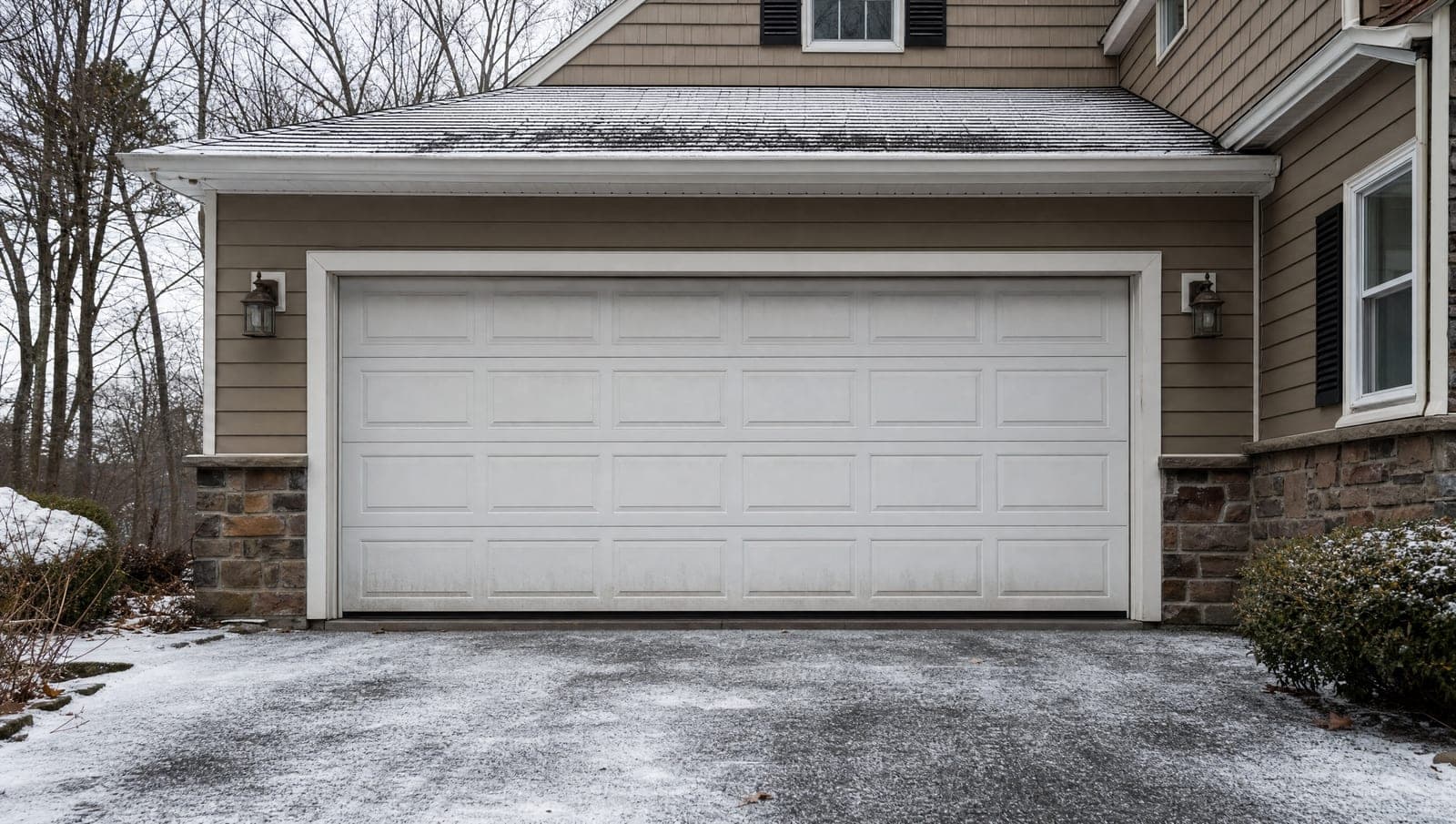
The first hard cold snap in Bergen County is when garage doors start acting up. The bottom seal goes stiff and stops sealing, the door groans on the way up, and somewhere around February you hear that loud bang from the garage that means a torsion spring just let go. Most of it is preventable with an hour of work in the fall, before the metal contracts and the grease turns to molasses.
Here is the checklist we run on our own service trucks every fall, written for real North Jersey winters: freeze-thaw cycles, ice storms, single-digit mornings, and the road salt that coats every lower door panel from Paramus to Ridgewood. Work through it before the weather turns and you will dodge most of the failures we get called out for in January and February.
The pre-winter garage door checklist
You can do almost all of this yourself with a stepladder, a soft cloth, a socket wrench, and the right lubricant. The one thing to leave alone is the springs, which we will cover below. Everything else is fair game for a careful homeowner.
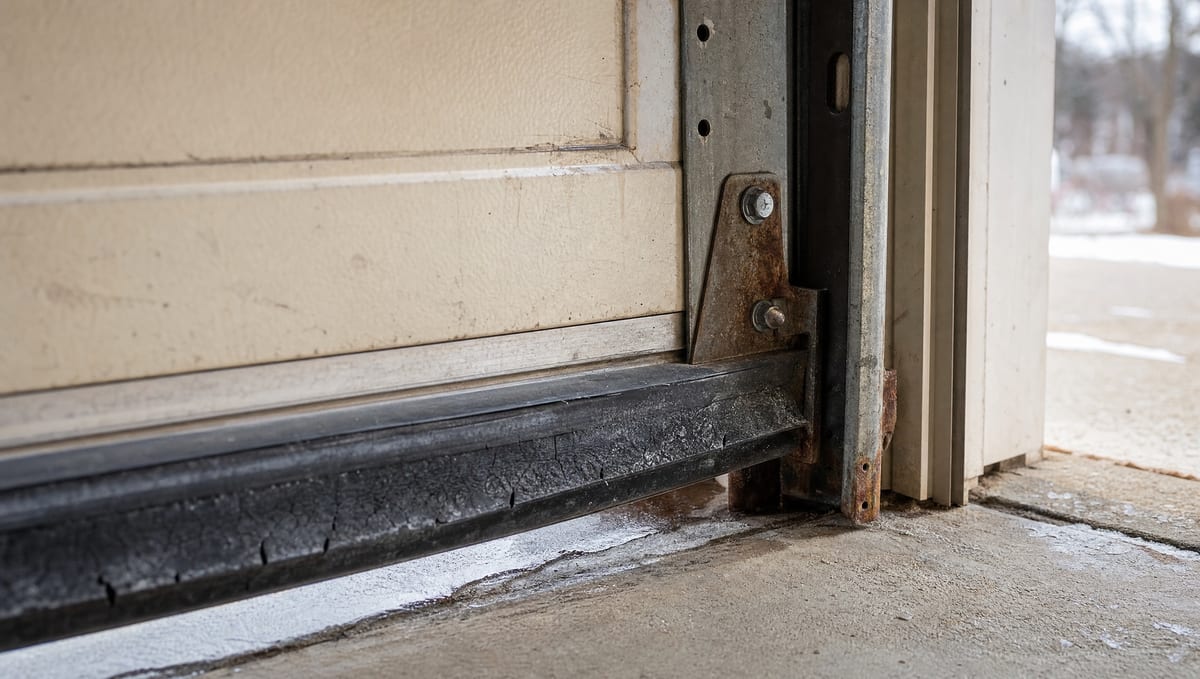
- Inspect and replace the bottom weatherseal (astragal). The rubber or vinyl strip on the door's lower edge is the bottom seal, sometimes called the astragal. Run your hand along it and look for cracks, flat spots, or sections that no longer touch the floor. Cold makes old seal material brittle, so a strip that looks fine in October can shatter in January. Bottom seals come in different profiles (T-type with a double channel, J-type, bulb, and beaded) and have to match the retainer track on your door, so check the shape before buying a replacement.
- Check the perimeter weatherstripping and brush seals. The flexible strips along the sides and top of the door stop wind-driven snow. Brush seals are common on the perimeter. Look for gaps where daylight shows through when the door is shut.
- Check the threshold seal on the floor. This is a separate hard-rubber strip that adheres to the garage floor under the door, and it is what keeps meltwater and blowing snow from sliding in underneath. If your garage floor slopes slightly toward the door, a threshold seal earns its keep all winter.
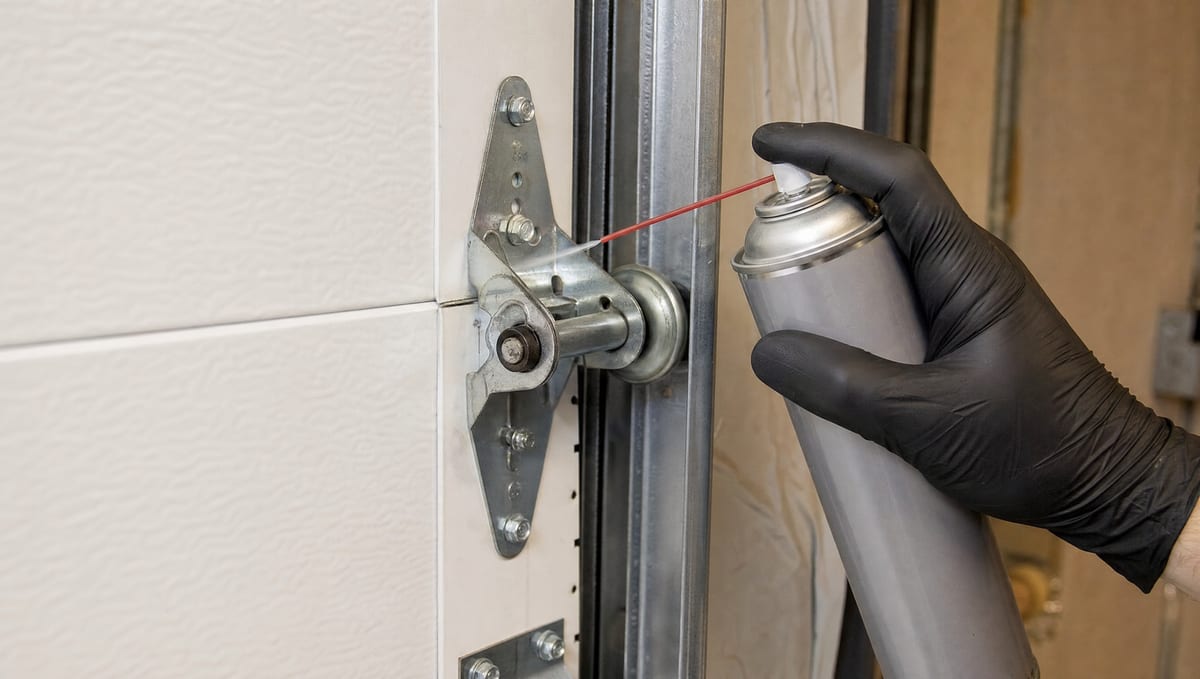
- Lubricate the moving metal with the right product. Hinges, rollers (the ball bearings inside steel rollers), the torsion spring coils, and the bearing plates on either side of the spring all want a fresh coat. Use a silicone-based garage-door lubricant or white lithium grease. Both resist moisture and stay slippery in freezing temperatures. Wipe off the excess so it does not collect grit.
- Skip plain WD-40 as your lubricant. The standard blue-and-yellow can is a solvent and rust penetrant, not a long-term lubricant, and it can strip the protective grease already on your hardware. WD-40 does sell separate silicone and white-lithium products, and those are fine. Just do not reach for the plain multi-use can to quiet a squeak.
- Tighten the hardware that loosens in the cold. Steel contracts as temperatures drop, and that works hinge bolts, bracket lags, and track fasteners loose over a season. Go around with a socket wrench and snug everything. Do not overtighten and strip the bolt; just bring it back to firm.
- Test the photo-eye safety sensors. The two small sensors near the floor (no more than about six inches up) project an invisible beam. With the door closing, wave a broom handle through the beam near the floor. The door should stop and reverse right away. The indicator lights should glow steady, not blink. Cold can fog or knock these out of alignment, so wipe the lenses with a dry soft cloth. Never spray lubricant on them; it attracts dust and clouds the lens.
- Test the auto-reverse force setting with a 2x4. Lay a flat two-by-four on the floor in the door's path and hit close. When the door's bottom hits the wood, it must stop and reverse. If it keeps pushing, stop using the opener and get it serviced. Both this test and the sensor test are part of UL 325, the federal safety standard that has applied to residential openers since January 1, 1993. Use a board, never your hand or foot.
- Recalibrate the opener force or sensitivity for the cold. Cold thickens the factory grease on the opener rail or screw drive and stiffens the whole door, so the opener may strain or reverse partway. A small seasonal bump to the force setting can fix that, but check your opener manual first and re-run the 2x4 test afterward so you have not defeated the safety reverse.
- Clear and de-ice the tracks. Knock leaves, road grit, and ice buildup out of the vertical and horizontal tracks. A roller riding over a chunk of ice binds and can pull the door off square. Do not lubricate the inside of the track itself; it is the rollers that get lubed, not the track.
- Rinse off road salt and brine. Plows throw salt and brine onto the lowest door section and the bottom brackets, and that is the first place a North Jersey door rusts. Every few weeks, rinse the bottom panel and hardware with plain water, let it dry, and keep it lubricated. It takes five minutes and adds years to the bottom section.
- Check or replace the opener battery backup before storm season. Many openers carry a 12V backup battery so the door still works in a power outage, which matters when an ice storm takes out the grid. These are wear items, usually good for one to three years, so test it now and replace a tired one before winter rather than during it.
Why springs break in the cold, and why you should not touch them
If you only remember one thing from this list, make it this: cold weather is hard on torsion springs. Steel contracts and grows more brittle as it gets colder, tiny microfractures from years of cycling spread faster under tension, and a spring that was quietly fatiguing all year finally snaps on a frigid morning. That is why we field so many spring calls in late winter across Bergen County.
Builder-grade torsion springs are commonly rated around 10,000 cycles, which works out to roughly seven to ten years for an average household. If your garage is the main way you enter the house, you cycle the door far more and burn through that rating faster. High-cycle springs in the 16,000 to 20,000-plus range are available as an upgrade and are worth asking about if you are already replacing one.
Never try to adjust, remove, or wind a torsion spring yourself. It holds enough stored energy to break bones and has put plenty of confident DIYers in the emergency room. Lubrication, cleaning, inspection, and the two safety tests are yours to do. The spring work belongs to a technician.
While you are inspecting, look at the springs above the door. Gaps in the coil, rust, or a visible separation mean it is on borrowed time. Catching a weakening spring in the fall lets you schedule a calm replacement instead of an emergency call on the coldest day of the year. Our garage door spring repair crew handles those swaps all winter, and homeowners in Ridgewood and the surrounding towns tend to book them as soon as the first cold snap hits.
Insulation and the attached-garage question
Attached garages are everywhere in New Jersey housing stock, and they share a wall (and often a ceiling) with heated living space. If yours is attached or you heat it, an insulated door pays off in lower bills, a warmer mudroom or bedroom on the other side of that shared wall, and quieter operation.
Residential door R-values run from about R-6 up past R-18. For an attached or heated garage in our climate, treat R-10 as the practical minimum and aim for the R-12 to R-18 range if you can. The higher numbers come from doors built with polyurethane foam injected between two steel skins; polystyrene panel doors insulate less. If you are weighing a replacement, this is a good thing to discuss when you are getting an estimate so the door actually matches how you use the space.
Do you need a permit to replace a garage door in NJ?
New Jersey runs a single statewide Uniform Construction Code, but each town's local construction office enforces it and sets its own fees and timelines. A like-for-like swap (same size, same opening, no structural or electrical changes) is often treated as ordinary maintenance and may not need a permit. A new installation, a structural change, or new wiring commonly does. Because it genuinely varies from one borough to the next, call your own municipal construction office before you assume. We will not quote you a permit fee, and you should be skeptical of anyone who does it sight unseen. Homeowners in Morristown and other towns we cover routinely confirm this with their local office before a job.
Frequently asked questions
What lubricant should I use, and is WD-40 okay?
Use a silicone-based garage-door lubricant or white lithium grease on the hinges, rollers, spring coils, and bearing plates. Both hold up in freezing temperatures and resist moisture. Plain multi-use WD-40 is the wrong choice as a lubricant because it is a degreaser and can strip existing grease. WD-40's separate silicone and white-lithium sprays are fine; it is only the standard can to avoid.
Why do garage door springs always seem to break in the cold?
Steel contracts and becomes more brittle when it is cold, so existing wear and microfractures in a fatigued spring give way under tension, often with a loud bang on a frigid morning. The cold does not create the problem on its own; it pushes an already-tired spring over the edge, which is why breakages cluster in winter.
How do I test the auto-reverse and safety sensors?
For the sensors, wave a broom handle through the beam near the floor while the door is closing; it should reverse immediately. For the force setting, lay a 2x4 flat on the floor in the door's path and close it; the door must stop and reverse on contact. If either test fails, stop using the opener and have it serviced. Use a board, never your hand.
My garage door struggles or opens slowly in the cold. What is wrong?
Usually a mix of stiffened factory grease on the opener drive, thickened lubricant on the hardware, and a door that has tightened up in the cold. Fresh silicone or lithium lubricant on the moving parts and a small seasonal adjustment to the opener's force setting (per your manual) usually fixes it. If it still strains, have it looked at before a spring or opener gear fails.
How often should the opener battery backup be replaced?
Backup batteries are consumables, commonly lasting one to three years depending on brand and use. Test yours before winter storm season and replace a weak one ahead of time. Check your opener manual for the exact interval and battery type.
How do I keep cold air, snow, and salt from getting under the door?
Replace a cracked or flattened bottom seal before it gets brittle, confirm the perimeter weatherstripping and threshold seal are intact, and rinse road salt off the bottom panel and hardware every few weeks. That combination handles drafts, blowing snow, and the corrosion that salt causes.
Book a pre-winter tune-up
If you would rather have a technician run this whole checklist, that is exactly what a seasonal tune-up is for. We inspect and adjust the springs and hardware, lubricate everything correctly, test the safety reverse and sensors, and flag anything heading for trouble before the cold finds it. We are based in Paramus, cover roughly a 25-mile radius across North Jersey, and offer same-day and emergency service 24/7. Homeowners in Paramus and nearby towns usually book their garage door tune-up in the fall so they are not the ones calling during the first ice storm. Garage Door USA is licensed and insured in New Jersey. Call (201) 500-3377 to get on the schedule.